The art of brewing
From the malting to the final assembly, the Burgundy of Flanders offers a unique brewing experience.
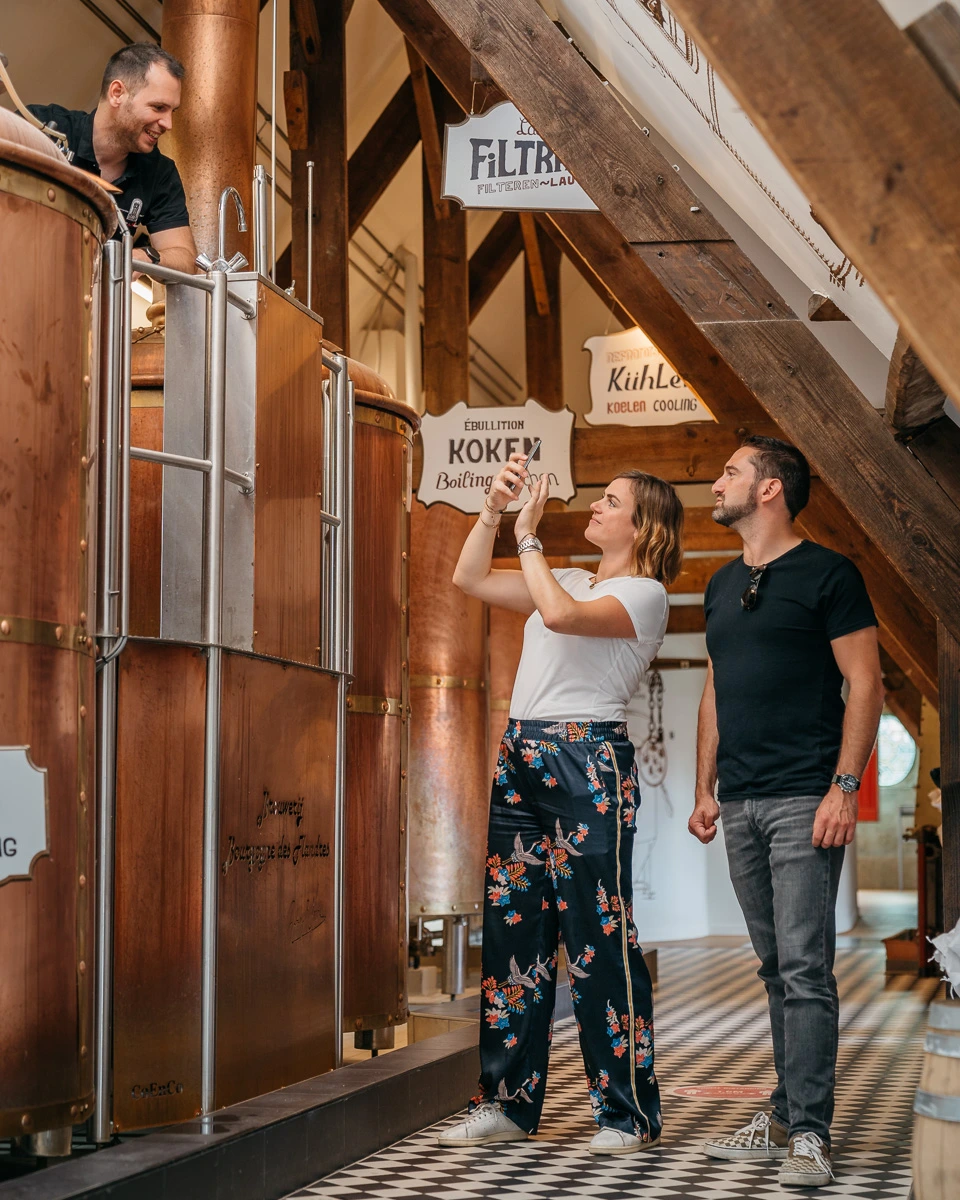
From grain to malt
To grow, to work and even to visit a brewery, we need energy. Sugar is pure energy: the more we eat, the more energy we have. If we have a surplus of energy, we store it in our bodies in the form of fat. We can then draw on our reserves if we suddenly need extra energy.
Grains also contain reserve substances: starch. Starch is an extremely long chain of sugar. In nature, the grain converts this starch into sugar, which it will use to grow its first roots and stem.
In a malt house, we imitate this natural process by giving water to the grains. The seeds germinate, but are then directly dried to prevent them from developing into a plant. By drying them at different temperatures, we obtain light and dark malts. The darker malt is for example used to produce a darker beer.
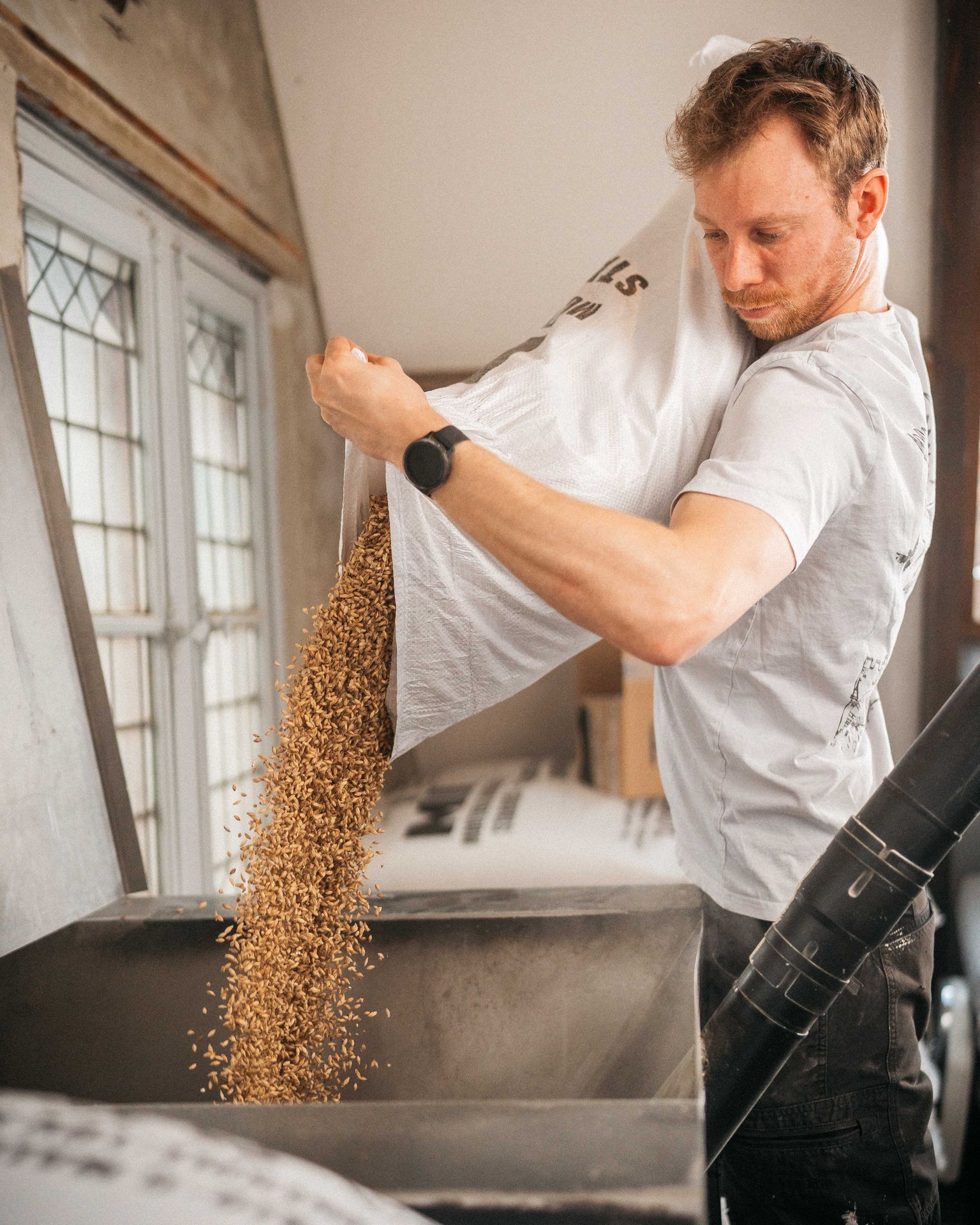
Release of the starch
The first step of brewing is the crushing of the malt. This operation serves to release as much starch as possible. This starch will indeed be transformed into sugars which, later in the brewing process, will ferment to become alcohol. We avoid crushing the grains too finely, as we will need the husks (the envelope of the malt) later as a natural filtering bed during filtration.
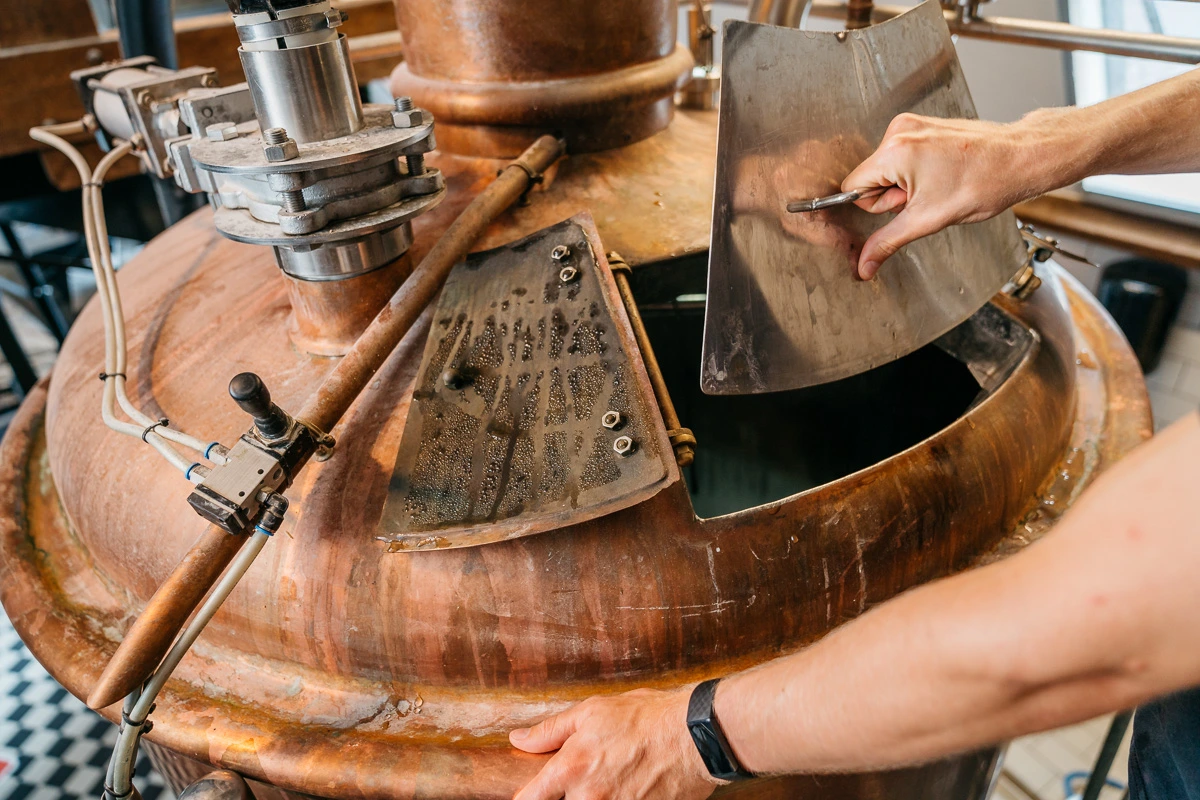
The magic of sugar
The first steps taken in a brewery are comparable to what happens in a sugar factory. The crushed malt is poured with water into the mashing vessel. By raising the temperature between 62 °C and 72 °C, we will cause the decomposition of starch into sugar.
We will need the sugar later for fermentation.
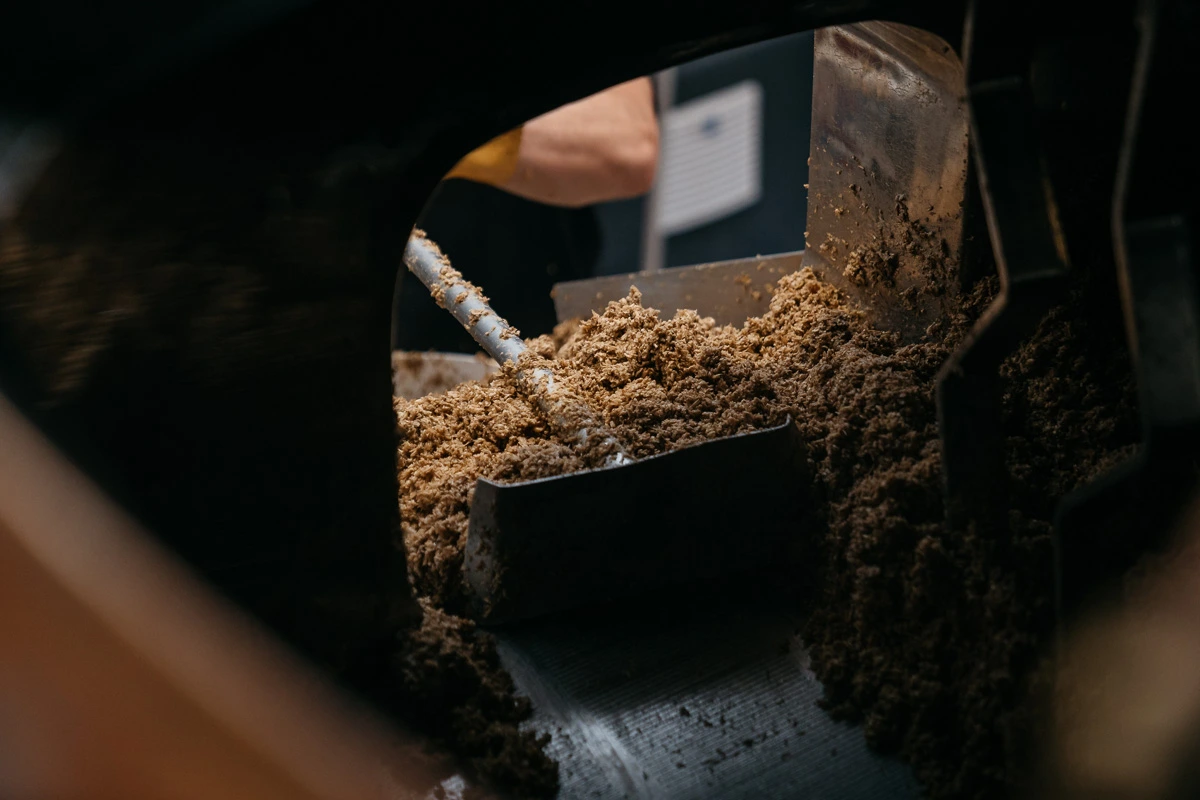
The separation of the husks
Our mash still contains the husks. In the filtration vessel, we separate the husks from our wort. The spent grain (the common name for the husks) is sent to a farm in Bruges, which will incorporate it into its feed.
The art of hops
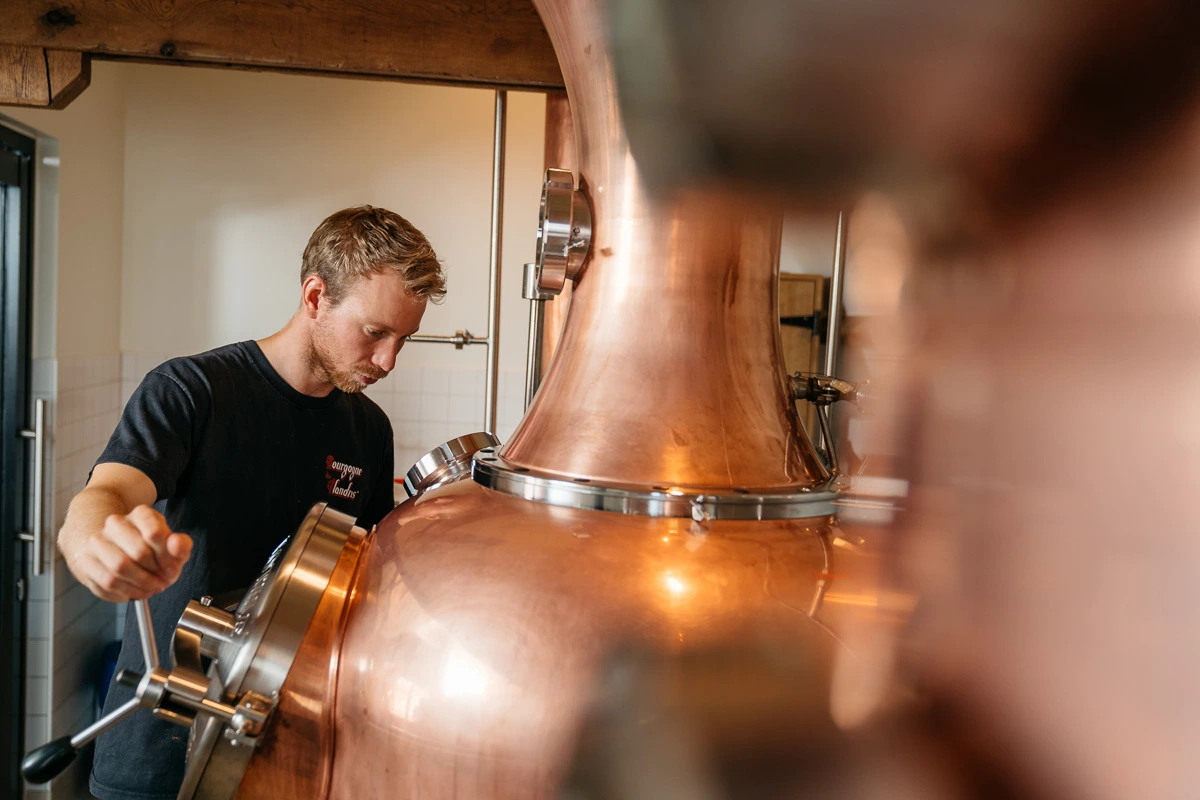
After filtration, a clear and sugar-rich liquid remains: the wort. Nous le faisons bouillir pendant 1 heure minimum dans notre cuve d'ébullition. L'excédent d'eau va ainsi pouvoir s'évaporer et le sucre va caraméliser. La cuisson garantit aussi la stérilisation du moût.
During the cooking, we add the hops, which will give the bitter taste and protect the wort from undesirable bacteria. Hops therefore contribute not only to the taste of the beer but also serve as an excellent antibacterial.
Before allowing the yeasts to act, we cool the wort. Because just like you, the yeasts would not like to swim in a bath at 100 °C.
The work of the yeasts
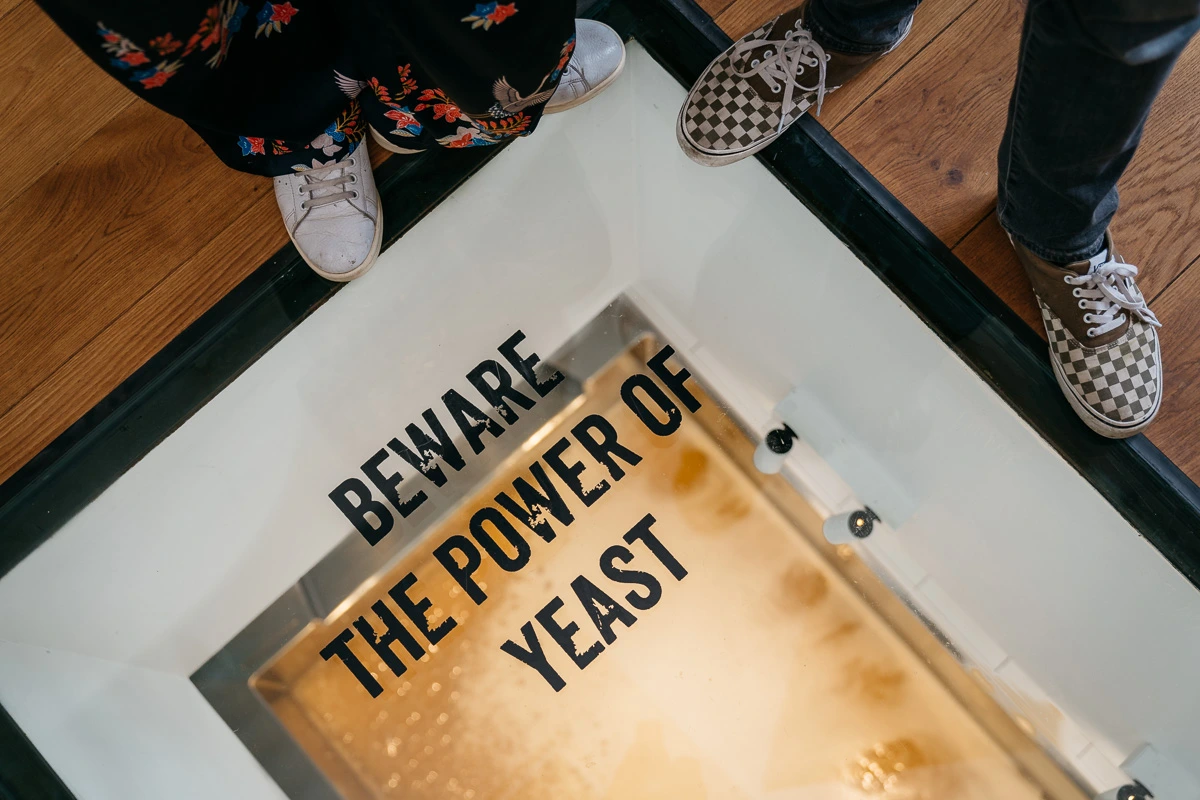
For the Bruinen Os, the yeast ferments in an open tank for 5 days, a traditional technique that develops subtle fruity aromas, notably of apple and banana.
The Art of Blending
Blending is the secret of the Burgundy of Flanders. Two components, years of patience, a unique signature.
Burgundy
of Flanders
Bourgogne des Flandres occupies a very special place in the Belgian brewing landscape. It is a typical example of the Flemish tradition of blending beers where young and old beers are judiciously mixed to achieve a perfect balance. Den Bruinen Os, which is brewed on-site in the attic, is blended with lambic from the Timmermans Brewery. This lambic has aged for more than twelve months in wooden barrels. The result is a surprising reddish-brown beer, with a low alcohol content and very rich in flavour.
Come see the brewing
with your own eyes
Book your guided tour and discover live every step of the production of Bourgogne des Flandres, in the heart of Bruges.
Book my visit